An AI chatbot on your website: is it worth it for a small business?
A chatbot promises answers around the clock, but it can invent prices, slow your site down and raise privacy questions. When it makes sense and what it must have.
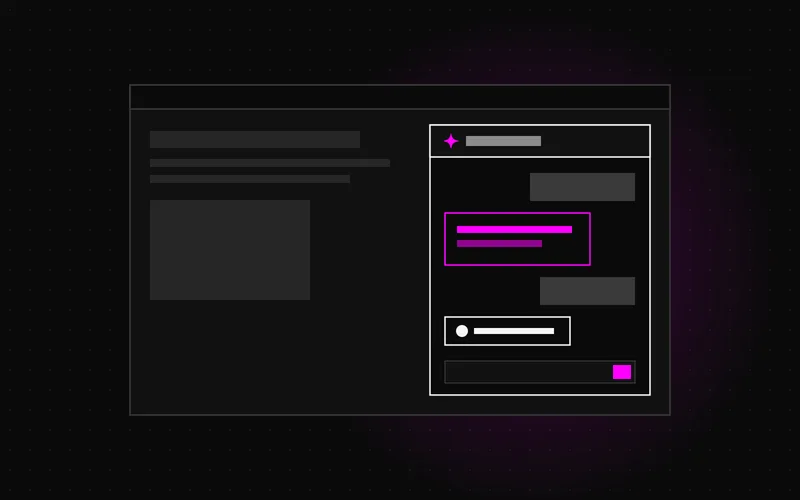
Almost every platform now offers to "add an AI assistant to your site". It's tempting: a customer asks at midnight and gets an answer straight away. But a chatbot isn't free even when it's free. You pay for it in site speed, in customer trust, and sometimes in promises you never made.
When it makes sense
- You get lots of identical questions (opening hours, delivery, prices of standard services).
- You have a large catalogue or an offer people find hard to navigate.
- Customers come from several countries and write in different languages.
- Many enquiries arrive outside working hours and a fast answer matters.
When it doesn't
- You get few enquiries and people call or WhatsApp you anyway.
- The price depends on an on-site assessment. A bot can't quote for a bathroom renovation.
- You don't have time to check regularly what the bot is saying.
Four risks
1. The bot makes things up
Language models sound confident even when they have no idea. A bot can "promise" a discount, a deadline or a condition that doesn't exist. This isn't theoretical: in 2024 a Canadian tribunal ruled that Air Canada had to honour a refund policy its chatbot had explained to a customer incorrectly. To a customer, what your site says is your word.
2. Customer data
Everything people type into the chat goes to the chatbot provider. That has to be stated in your privacy policy, and the bot shouldn't ask for sensitive data. For businesses working with the EU, GDPR applies here too.
3. A slower site
Chat widgets are often heavy scripts that load on every page, even when nobody opens them. That hurts speed and how quickly the site responds to taps (more in the article on site speed). The fix: load the chat only when someone clicks the button.
4. The rules in the EU
Since 2 August 2026, the EU AI Act requires that people be told when they're interacting with an AI system, unless that's obvious from the context. The obligation falls mainly on whoever makes the chatbot, but your customers see the chat on your site. Make sure it clearly says it's an AI assistant. This is general information, not legal advice.
An alternative that often works better
For most small businesses, a combination that can't invent anything gets better results:
- A good FAQ section with concrete answers.
- A visible WhatsApp button and phone number.
- A short enquiry form.
Bonus: Google and AI assistants read the FAQ on your site too, so the same section helps you in AI search.
If you still want a chatbot
- Have it answer only from your own information: your site, price list and FAQ.
- When it doesn't know, it should say so and offer contact with a person.
- A clear "AI assistant" label.
- Load it on click only.
- It should not quote prices or deadlines you haven't approved in advance.
- Once a week, read the conversations and fix what the bot gets wrong.
Not sure whether your business needs a chatbot or a good FAQ? Get in touch for a free twenty-minute call.